





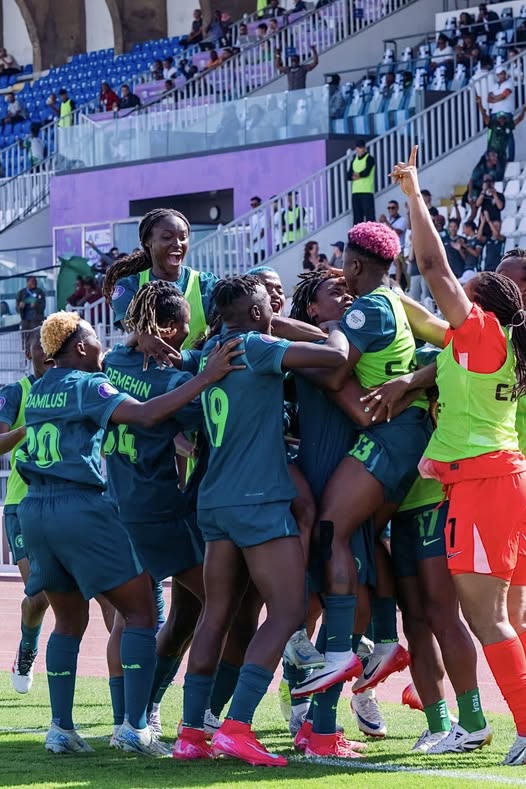
Nigeria’s chase for a historic 10th Women’s Africa Cup of Nations title—dubbed “Vision X”—has been defined by clinical performances, late-game heroics, and a steely mindset. Here’s an in-depth journey through each stage, followed by a nuanced breakdown of what makes this squad so formidable, where they must sharpen up, and their true chances in the final.
The Journey So Far
Group Opener vs Tunisia
Nigeria opened with a statement 3–0 victory. Asisat Oshoala’s incisive runs and two goals set the tone, while Rasheedat Ajibade dictated midfield transitions. Osinachi Ohale marshaled the backline, ensuring defensive solidity and airflow into attacking transitions.
Group Match 2 vs Botswana
A tight affair settled by a Kanu header in the 23rd minute. Once ahead, the Falcons dropped into a disciplined block, nullifying Botswana’s wide threats. The clean sheet underscored the defense’s ability to shift from aggressive pressing to compact containment.
Group Match 3 vs Algeria
A goalless stalemate that tested Nigeria’s patience. Despite creating chances through swift wing play and midfield combinations, the final touch eluded them. Yet the clean sheet highlighted squad depth—even rotated full-backs and midfielders maintained shape and intensity.
Quarter-Final vs Zambia
A five-goal thrashing. Five different scorers showcased the collective firepower: from Oshoala’s poise in the box to Tijani’s late tap-in. High-octane pressing forced turnovers, while rapid vertical switches kept Zambia chasing ghosts. This was the Falcons firing on all cylinders.
Semi-Final vs South Africa
An encounter brimming with drama. Rasheedat Ajibade converted a first-half penalty, but Linda Motlhalo replied before the break. Deep into stoppage time, Michelle Alozie emerged as hero, slotting home to seal a 2–1 victory. The win exemplified nerve-shredding resilience and clutch mentality.
Team Strengths
- Flair and Variety in Attack
A balanced forward line blends Oshoala’s veteran instincts, Ihezuo’s direct power runs, and Okoronkwo’s inventive crosses. Defenses struggle to predict which angle the next threat will arrive from. - Defensive Cohesion and Transition Reading
The Ohale–Demehin partnership reads aerial and ground duels with equal prowess. Full-backs switch seamlessly between overlapping support and disciplined cover, cutting off counterattacks before they develop. - Midfield Press and Ball Progression
Ajibade and Echegini form a twin-engine that wins possession high up and crafts progressive passes into the final third. Their stamina and spatial awareness pin opponents back and spring swift counters. - Major Tournament Mentality
With nine titles in the trophy cabinet, the psychological edge is undeniable. Players thrive under knockout pressure, believing they can find solutions in the tense moments that decide finals.
Areas to Tighten (Weaknesses)
- Finishing Consistency
Apart from the Zambia rout, several gilt-edged chances against Algeria and Botswana went begging. Sharper composure in front of goal could shift tight matches into comfortable wins. - Tactical Flexibility
When the initial 4-3-3 press is blunted, in-game shape changes can be slow. Early substitutions to tweak midfield balance or switch wings may unlock stubborn opponents faster. - Injury and Rotation Management
Ashleigh Plumptre and Chioma Okafor have picked up knocks that, while minor, risk cumulative fatigue. The strength of backup options will be tested if starters are forced to rest. - Concentration Spikes
Last-minute winners are exhilarating but razor-thin margins can flip. Maintaining mental focus from whistle to whistle is essential to avoid conceding late.
Tactical Blueprint
- Base Formation: 4-3-3
Utilizes dynamic full-backs, a midfield pivot for cover, and wingers who stretch play. - Pressing Triggers
High-line pressure initiated when opponent backs are turned. Ajibade leads the charge into pockets to force errant passes. - Transition Play
Direct vertical deliveries through Okoronkwo or Ihezuo; diagonal switches exploit Oshoala’s pace on the shoulder of the last defender. - Set-Piece Solutions
Ohale and Alozie as aerial targets. A mix of near-post flicks and far-post overloads keeps opposition guessing.
Key Players
- Chiamaka Nnadozie, Goalkeeper
Commanding in the box, excels in penalty saves and sweeper-keeper sorties. - Rasheedat Ajibade, Midfielder
Engine of the side with two goals so far; blends defensive grit with precise distribution. - Asisat Oshoala, Forward
Clinical finisher whose intelligent movement opens channels and draws multiple markers. - Esther Okoronkwo, Winger
Top assister with four setups; her dribbling unsettles full-backs and creates space. - Osinachi Ohale, Center-Back
Aerial powerhouse and organizer of the backline; lethal on defensive and offensive set pieces. - Michelle Alozie, Super-Sub
Late-game impact player whose stoppage-time winner epitomizes her clutch pedigree.
The Final Frontier: Vision X
Why They’re Favorites
No other African nation matches Nigeria’s nine-title haul. Recent performances suggest the squad is peaking at the perfect time, blending experience with youthful verve. Their mental resilience and capacity for late strikes give them the edge in tight finals.
What Could Trip Them Up
Facing a host nation in a raucous atmosphere demands unwavering composure. Opponents will dissect every pattern of play; a single lapse in buildup or concentration could be ruthlessly punished. Tournament fatigue may amplify minor errors under the microscope of a final.
Chance of Clinching Vision X
Estimated probability sits around 60–65 percent. A low-scoring tight contest favors Nigeria’s proven habit of late decisive moments. Early goals would allow them to lean on defensive discipline and mid-block press to see out the result.
Final Thoughts
The Super Falcons are moments away from inscribing a tenth continental crown in their storied legacy. To lift Vision X, they must merge clinical finishing with tactical adaptability and unwavering focus from the first whistle. If they strike that balance, they will once again soar above their African rivals.