





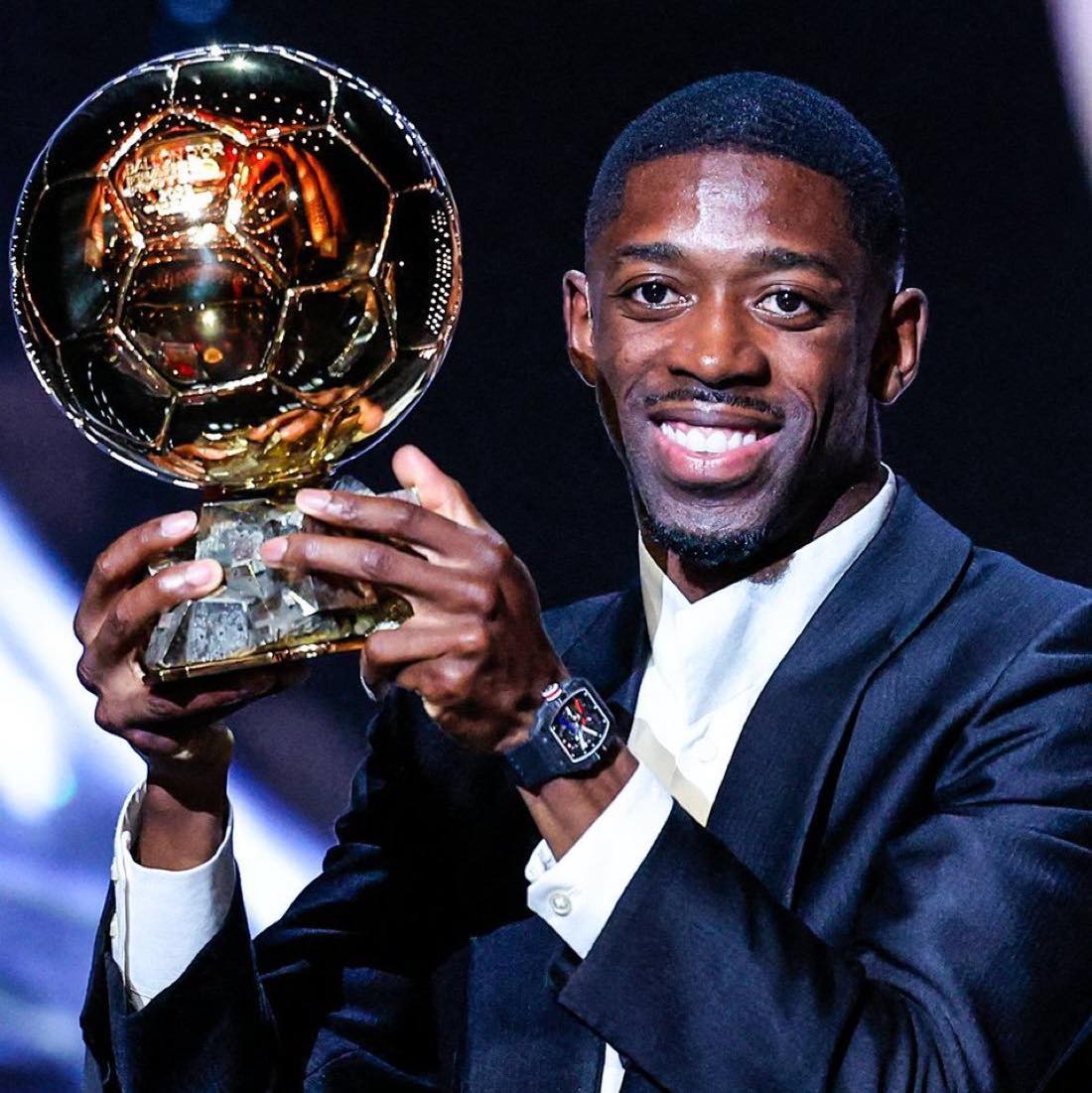
The French forward Ousmane Dembélé has won the 2025 Ballon d’Or, capping off a spectacular season with Paris Saint-Germain (PSG). His victory is a testament to his incredible transformation into a goal-scoring and creative force, leading PSG to their first-ever UEFA Champions League title alongside a domestic double.2
Why Dembélé Edged Out Other Nominees
Dembélé’s win was secured by his outstanding individual and collective achievements throughout the 2024-2025 season. He wasn’t just a part of a successful team; he was the catalyst. After being converted into a center-forward, he recorded a phenomenal 37 goals and 15 assists across all competitions. This remarkable output, a career-best, was a crucial factor.
While other top nominees, such as Barcelona’s Lamine Yamal, had stellar seasons, Dembélé’s success was ultimately defined by trophies. The Ballon d’Or places significant weight on both individual performance and team achievements. 5 Dembélé’s key role in PSG’s historic Champions League win—a trophy the club had long coveted—gave him the decisive edge over his rivals.6 His ability to deliver in crucial, high-pressure matches, including the Champions League final, solidified his case.
What Dembélé’s Win Means for African Football Fans
While Dembélé is a French international, his victory holds a profound symbolic significance for African football fans, particularly given the close ties of many French players to the continent. This win represents a triumph for a player of African descent, reinforcing the message that talent and dedication can lead to the highest individual honors in the sport, regardless of one’s background. It continues to fuel the dreams of aspiring young footballers across Africa, who see players like Dembélé as an inspiration.
Ballon d’Or History: African Contenders and How Nigerians Have Fared
The history of the Ballon d’Or is one of both triumphs and near misses for African players. Only one African footballer, the Liberian George Weah, has ever won the award, in 1995. This landmark achievement broke the European dominance of the prize and remains a source of immense pride for the continent.
Since Weah’s historic win, several African stars have come close. The Ivorian striker Didier Drogba finished 4th in 2007, while the Cameroonian legend Samuel Eto’o finished 5th in 2005. More recently, Senegal’s Sadio Mané came in second in 2022, and Egypt’s Mohamed Salah has consistently placed high in the rankings.
For Nigeria, the Ballon d’Or journey has been marked by a series of nominations that showcase the nation’s footballing prowess. The highest-ranked Nigerian male footballer in history is Victor Osimhen, who finished 8th in the 2023 Ballon d’Or rankings after leading Napoli to their first Serie A title in over three decades. Other notable Nigerian nominees include:
- Nwankwo Kanu: Nominated in 1996 and 1999, with his best finish being 11th.
- Finidi George: A nominee in 1995, finishing 21st, the same year as George Weah’s win.
- Daniel Amokachi and Jay-Jay Okocha: Both were nominated in 1995, reflecting a golden era for Nigerian football.
- Asisat Oshoala: A prominent figure in the women’s game, she has been nominated for the Ballon d’Or Féminin multiple times, finishing 16th in 2022 and 20th in 2023.
These nominations, while not resulting in a win, underscore the significant impact Nigerian players have had on the global stage, continually inspiring new generations of talent.
#Football#Soccer#FootballNews#BallonDor#BallonDor2025#FootballFans#FootballLife#OusmaneDembélé#Dembélé#PSG#ParisSaintGermain#AllezParis#AfricanFootball#NigerianFootball#Nigeria#History#FootballAnalysis#BreakingNews#ChampionsLeague#UCL#Sports#FIFA