




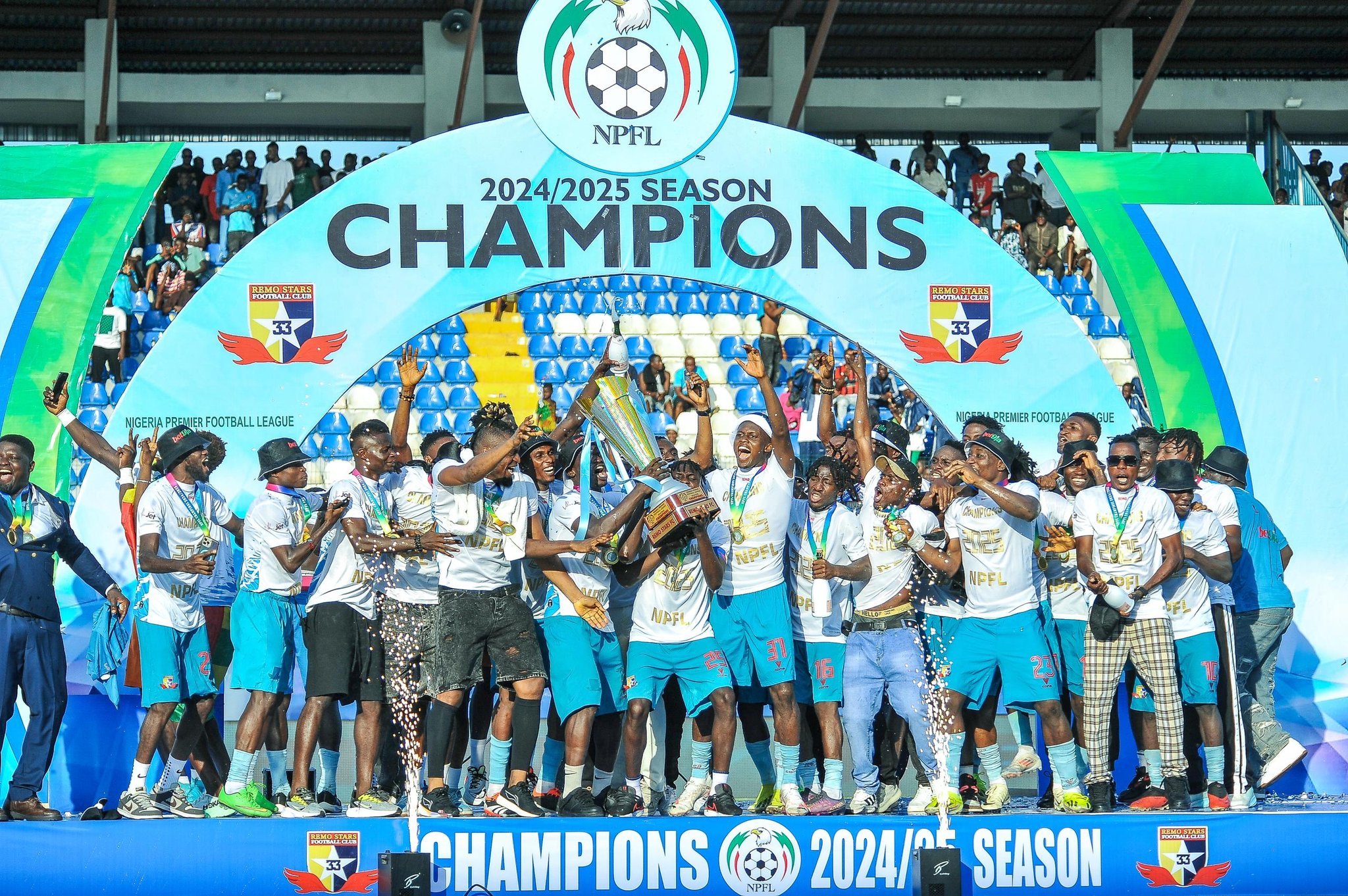
The Nigerian Professional Football League (NPFL) enters 2026 carrying familiar hopes—and familiar doubts. Every new CAF Champions League and Confederation Cup campaign rekindles belief that Nigerian clubs can once again stand shoulder to shoulder with Africa’s elite. Yet year after year, the story often ends the same way: early exits, narrow defeats, and questions that refuse to go away.
Can NPFL clubs truly compete in Africa in 2026—or are we still chasing a fading legacy?
This article critically examines Nigerian clubs’ continental chances in 2026 through the lens of CAF performances, club administration, infrastructure, and the deeper reasons why the NPFL continues to struggle on the African stage.
NPFL Clubs in CAF Competitions: A Reality Check
There was a time Nigerian clubs were feared across Africa. Enyimba’s back-to-back CAF Champions League triumphs in 2003 and 2004 remain iconic. But in recent years, NPFL representatives have failed to replicate such dominance.
Recent Trends in CAF Performances
- Early eliminations in preliminary or group stages have become common.
- Nigerian clubs often struggle away from home, particularly in North and Southern Africa.
- Tactical discipline, game management, and squad depth frequently fall short against continental opposition.
In 2026, NPFL teams are again entering CAF competitions with promise—but history demands caution. The gulf between Nigeria and Africa’s best leagues (Egypt, Morocco, Tunisia, South Africa) remains glaring.
CAF Performances: Where Things Go Wrong
1. Poor Away Records
NPFL teams notoriously underperform on the road:
- Limited exposure to high-intensity football
- Inadequate preparation and logistics
- Psychologicalfragility under hostile atmospheres
2. Squad Instability
Continental success demands continuity, yet many Nigerian clubs:
- Lose key players before or during CAF campaigns
- Fail to replace quality with equivalent experience
- Depend heavily on young, untested squads
3. Tactical Naivety
African competitions are unforgiving:
- NPFL clubs often play open football when caution is required
- Game management, time control, and defensive compactness are weak points
Club Administration: A Silent Saboteur
One of the biggest reasons NPFL clubs struggle continentally lies off the pitch.
Administrative Challenges
- Poor financial planning for CAF campaigns
- Delayed player salaries and bonuses
- Lack of long-term continental strategy
While clubs from North Africa operate like modern football businesses, many NPFL teams still function as extensions of state governments—vulnerable to politics and inconsistent funding.
Ownership and Governance Issues
- Frequent changes in management
- Short-term thinking focused on league survival rather than continental success
- Minimal investment in technical departments
Until club administration becomes professional and independent, Nigerian teams will continue to fight uphill battles in Africa.
Infrastructure: Competing With One Hand Tied
Modern football success is built on infrastructure—and this is where NPFL clubs suffer most.
Stadiums and Training Facilities
- Inconsistent pitch quality affects style of play
- Limited access to modern gyms, recovery centers, and medical facilities
- CAF venue requirements force clubs to relocate home matches
When Nigerian teams lose the advantage of playing at home, their chances of progression shrink dramatically.
Why NPFL Still Struggles Continentally
The NPFL’s continental struggles are systemic, not accidental.
Key Reasons
- Domestic league intensity is too low compared to CAF standards
- Player exodus weakens squads before continental campaigns
- Poor officiating and match tempo at home fail to prepare players
- Minimal exposure to international football culture
While talent is abundant in Nigeria, the ecosystem fails to nurture it for sustained continental success.
Is 2026 Different? Reasons for Cautious Optimism
Despite the challenges, 2026 offers flickers of hope:
- Improved league organization and scheduling
- Growing emphasis on youth development
- Increased media exposure for NPFL matches
- CAF reforms creating more competitive balance
If Nigerian clubs can maintain squad stability, invest in preparation, and adopt smarter tactics, quarter-final or semi-final runs are not impossible.
What Must Change for NPFL Clubs to Compete in Africa
For Nigerian clubs to truly compete in 2026 and beyond:
- Professional club ownership models must be adopted.
- Infrastructure development must be prioritized.
- Technical planning for CAF competitions must start early.
- Player welfare and motivation must improve.
Without these changes, NPFL teams will continue to participate—but not contend.
Conclusion: Hope or History Repeating Itself?
The question is no longer whether Nigeria has the talent—it does. The real question is whether Nigerian football has the structure, discipline, and ambition to match Africa’s best.
In 2026, NPFL clubs can compete in Africa—but only if lessons from the past are finally learned.
Until then, Nigerian teams remain Africa’s great “what if.”
#NPFL#NigerianFootball#CAFChampionsLeague#CAFConfederationCup#AfricanFootball#NPFL2026#NigerianClubs#ChariotGlobal