


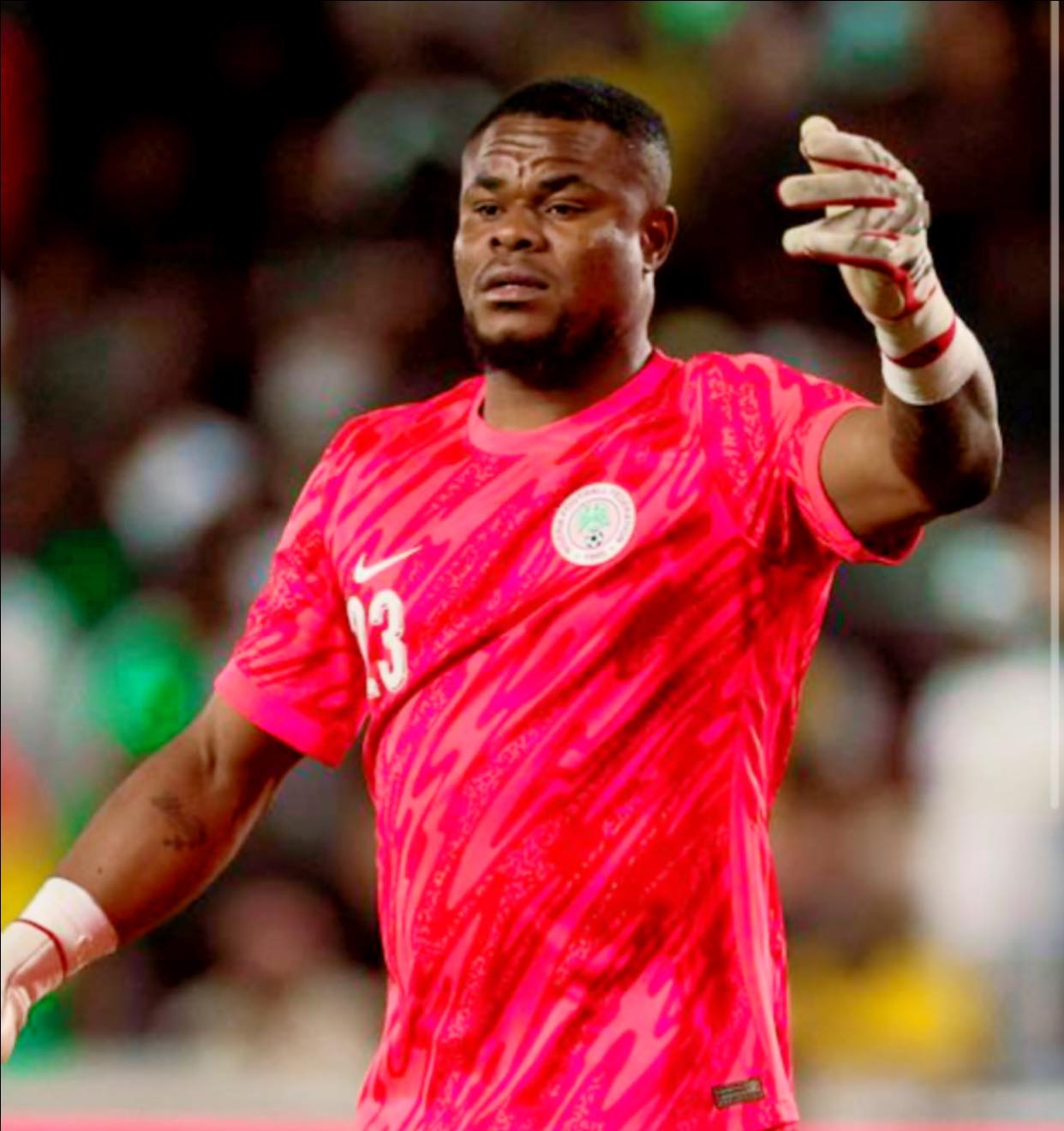
Nigeria’s hard-fought 2-1 away victory against Lesotho in the 2026 FIFA World Cup qualifiers, secured by goals from Akor Adams and William Troost-Ekong, was a necessary win in a tight Group C where only the top team is guaranteed a spot.
Stanley Nwabali arrived on the scene during AFCON 2024 as the solution to Nigeria’s long-standing goalkeeping woes, cemented by his penalty shootout heroics against South Africa. This success established a massive expectation of reliability and confidence. Yet, the late-game concession against Lesotho, followed by a near-fatal error, exposed a critical flaw: the blurring line between professional confidence and dangerous showmanship.
The question facing the Super Eagles is stark: Was the mistake confidence, or cockiness?
Forensic Analysis: From Cockiness to Panic (83′ and 95′)
The goalkeeper is the single player who can have the greatest impact—and carries the greatest responsibility—in football. Nwabali’s actions in the final moments of the Lesotho match demonstrated a systemic failure in mental discipline:
1. The Conceded Goal (83rd Minute): The Cost of Complacency
The goal that reduced Nigeria’s lead from 2-0 to 2-1 was scored by Hlompho Kalake. This happened almost immediately after Nigeria scored its second goal in the 80th minute. The critical error occurred when Nwabali “failed to claim a corner”, allowing Lesotho a second chance, which led directly to the goal.
This failure was not a technical impossibility but a high-risk half-measure rooted in psychological complacency, or cockiness. Having just seen the team secure a 2-0 lead, Nwabali likely experienced a momentary mental switch-off, causing him to hesitate on a fundamental aerial command duty. This translates the celebrated AFCON confidence into an in-game overestimation of control.
2. The Stoppage-Time Near-Miss (95th Minute): The Debt of Panic
If the first error was born of overconfidence, the second was a pure case of anxiety. Deep in stoppage time, a “mix-up between Nwabili and Semi Ajayi” in the box gifted Lesotho’s Fusi Matalabe an opportunity to equalize. Nigeria was only saved because Matalabe’s shot “trickled wide”.
This near-fatal lapse was the psychological debt paid for the 83rd-minute mistake. Having placed the team in jeopardy, Nwabali’s hallmark composure vanished, leading to acute anxiety and panic that caused the breakdown in communication with his defenders. The sequence is clear: overconfidence leads to the error; the error leads to panic.
The Critique of Theatrics: The Mandate for Seriousness
The user’s observation that Nwabali exhibits “theatrics,” “making fun of the opponents,” and “milling especially when the team is leading” [Query] is critical to understanding these lapses.
While confidence is an asset, when a player’s focus is split between their primary duty (vigilance and command) and managing their persona (exhibitionism), technical consistency suffers. Football, especially in the context of high-stakes World Cup qualification, is a game of seriousness. Nwabali’s errors provide concrete evidence that his desire to project an unflappable image may supersede the necessary, disciplined focus required for basic set-piece command and back-pass management.
The Super Eagles are walking a tightrope. They cannot afford risks introduced by a failure to maintain professional seriousness. Nwabali must urgently refine his game intelligence to separate the flamboyant confidence that serves him well in penalties from the disciplined vigilance required for open play. The position is not one to “mess with,” and failure to learn this lesson could irrevocably compromise the team’s World Cup dream.
Strategy for Remediation
To maintain Nwabali as the dependable first choice, the focus must shift to sustained mental discipline:
- Eliminate Half-Measures: Goalkeeping training must reinforce 100% commitment in claiming or punching aerial balls. Indecision, as seen in the 83rd minute, is fatal.
- Focus Reset Protocols: Nwabali must be conditioned to use immediate mental triggers after a significant event (such as scoring a goal) to prevent complacency, and after a goal is conceded, to prevent panic.
- Enforce Professional Standard: The coaching staff must establish clear expectations that distinguish between genuine leadership and unnecessary theatrics, prioritizing the singular mandate of securing the result in these crucial qualifiers.
#SuperEagles#Nwabali#WorldCupQualifiers#NigeriaFootball#GoalkeeperError#WorldCup2026#CAFQualifiers#LesothoVsNigeria#FootballAnalysis#NFF#NwabaliMistake#Theatrics#ConfidenceOrCalamity#SuperEaglesofNigeria