




Age cheat and the lost promise of Nigeria’s 2009 U-17s
A case study: the 2009 squad, what happened to the players — and why the system must change
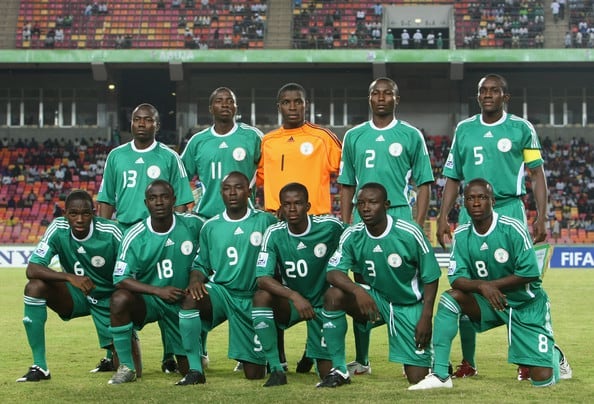
Nigeria hosted the 2009 FIFA U-17 World Cup and reached the final, producing a golden-boy winner (Sani Emmanuel won the tournament’s Golden Ball) and a crop of talented youngsters. Yet, sixteen years on, too many of that team never reached sustained senior success. Some became journeymen, some disappeared from professional football, and only a handful hit the trajectories their talent once promised. This isn’t mainly a talent problem — it’s a systems problem: paperwork, short-termism, mismanagement, and a culture that made age fraud easy.
1) Quick factual background
The 2009 FIFA U-17 World Cup was held in Nigeria (24 Oct–15 Nov 2009). Nigeria finished as runners-up; Sani Emmanuel won the Golden Ball, and Nigeria produced several goal scorers (including Stanley Okoro and Edafe Egbedi). The tournament also featured future global stars from other countries — Neymar, Casemiro, Philippe Coutinho, Isco, and Son Heung-min among them — players who went on to long top-level careers.
2) Where the Nigerian 2009 players went — sampled career snapshots
(Selected players from the 2009 squad; examples illustrate the pattern.)
-
Kenneth Omeruo — one of the success stories in relative terms: moved through the European loan circuit after Chelsea signed him, became a regular Nigeria international and long-term pro in Europe (as of 202,5, he was still playing professionally). His path was steady but never catapulted to the absolute elite; his early promise translated into a durable pro career rather than stardom.
-
Ogenyi Onazi — got a big move (Lazio) and played in Serie A, won AFCON with Nigeria in 2013, but from 2017 onward moved across many smaller clubs and leagues — a classic journeyman path. In short, peak years came early, later career was fragmented.
-
Olarenwaju “Larry” Kayode — top scorer in some earlier spells, signed by Manchester City in 2017, then moved through a string of loans (Girona, Shakhtar, others). He had moments — but the big permanent breakthrough at an elite club never arrived. That pattern (big move + immediate loan carousel) is repeated in Nigerian youth exports.
-
Sani Emmanuel — the tournament’s Golden Ball winner, who lit up the competition. After early moves (including Beitar Jerusalem), he struggled to find stable, long-term clubs and has effectively dropped out of regular top-level professional football since the mid-2010s. This is the painful “early peak, rapid fade” example.
-
Stanley Okoro (Little Messi) — dazzled at the youth level, made some moves to Europe, but by mid-late 2010s his club career stalled (released by Plateau United in 2017) and he did not establish a long senior top-flight career.
These are not isolated anecdotes. Look across the roster and you see a pattern: early youth fireworks; a handful of European contracts or loans; then instability, disappearing contracts, low-tier moves, or retirement before peak years.
3) Contrast: why peers from that same tournament made it, and many Nigerians didn’t
Players like Neymar, Casemiro, Coutinho, Isco, Morata, and Son Heung-min were in the same U-17 generation and built clear, supported pathways into elite senior careers. They benefited from structured club academies, robust scouting, high-quality domestic youth leagues, and quicker integration into stable professional systems that protected development, offered mentorship, and avoided repeated damaging loan cycles. Their football ecosystems — relative to Nigeria’s in that era — were more able to convert youth talent into senior world-class players.
4) The root causes (blunt, critical, and evidence-backed)
a)Age fraud and weak registration made planning impossible
Age-fraud (false documentation / “age-cheating”) has been a recurrent problem in African youth football. FIFA introduced MRI wrist scans in 2009 precisely because unreliable paperwork delivered unfair advantages and — crucially — wrecked honest, long-term planning for player careers. Nigeria has been repeatedly flagged in conversations about age verification; the MRI policy exposed the scale of the problem. When a federation tolerates or cannot prevent falsified ages, scouts and clubs cannot trust developmental records; players are rushed or misused, and the system rewards short-term tournament results over long-term player welfare.
b) Paperwork & civil-registration gaps (birth certificates, IDs) made fraud easy
For decades in Nigeria, it has been too easy to produce or alter birth documentation; that makes age verification difficult and encourages a culture of shortcuts. Recent national ID (NIN) drives and stricter SIM registration are helping — but only if applied consistently and early enough to matter for players’ youth registration. Those civil reforms arrived late relative to the cohorts in question, so the 2009 generation paid the price.
c) Short-term incentives, poor player management, and bad transfers
Clubs, agents, and even the NFF have sometimes prioritized quick transfer fees and tournament success over development plans: kids are shipped to Europe on paper moves, then bounced between loans, or stuck “on the books” of big clubs without integration. That ruins continuity, mental stability, and skill progression. The Manchester City → Girona → Shakhtar story for some players exemplifies this: a headline transfer doesn’t equal a development plan.
d) Infrastructure, coaching, and welfare gaps
Youth coaching quality, sports medicine, nutrition, and education in talent hotbeds in Nigeria (compared to academy systems in Europe/Brazil/Spain/Korea) have been inconsistent. Players sometimes peak physically early, burn out, or are mismanaged medically, and nobody guarantees them education or post-football pathways.
5) The human cost (and why “it’s not the players’ fault”)
When a 16-year-old is moved around, misdocumented, exposed to false promises, or left without mentorship, the psychological and economic damage is real. Talent doesn’t fail in a vacuum: systems fail talent. Players like Sani Emmanuel and Stanley Okoro were not “waste” because of a lack of ability — they were victims of patchy systems that prioritized a trophy or a short transfer fee over a 10-year career plan.
6) Practical fixes (what must change — concrete, implementable)
-
Mandatory, early civil registration: enforce NIN (or equivalent) for youth players before national team selection. Electronic birth records and NIMC integration must be non-negotiable.
-
Robust youth development contracts: standard minimum-term development contracts with education clauses, medical coverage, and clear sell-on/development compensation clauses.
-
Transparent transfer pathways: no starry headline signings without a documented plan (first-team pathway, guaranteed playing time targets, mentor coach).
-
Independent player welfare ombudsperson: a neutral body to track youth players’ wellbeing when moving abroad.
-
Community academies & coach education: Invest in domestic academies and certified coach pipelines so players aren’t dependent on early, risky foreign moves.
-
Rigour in MRI / age testing — plus safeguards: MRI is imperfect, but combined with better civil records, it’s far more effective. And players flagged should be supported, not just punished.
7) Final diagnosis — a short, sharp verdict
The 2009 U-17 story is a microcosm: Nigeria can still produce exceptional talents, but inconsistent civil registration, a permissive transfer market, poor long-term planning, and a culture that historically tolerated age-fabrication turn bright prospects into “what-might-have-beens.” Fix the registration system, professionalize youth contracts, hold federations and agents accountable, and invest in local development —and the next golden generation will not flicker out before their prime.
#NigeriaFootball #U17WorldCup #AgeCheat #YouthDevelopment #NFF #FootballPolicy #SaniEmmanuel #KennethOmeruo #OgenyiOnazi #FootballReform #PlayerWelfare #NIMC #TalentPipeline #FootballAcademy #AfricanFootball