



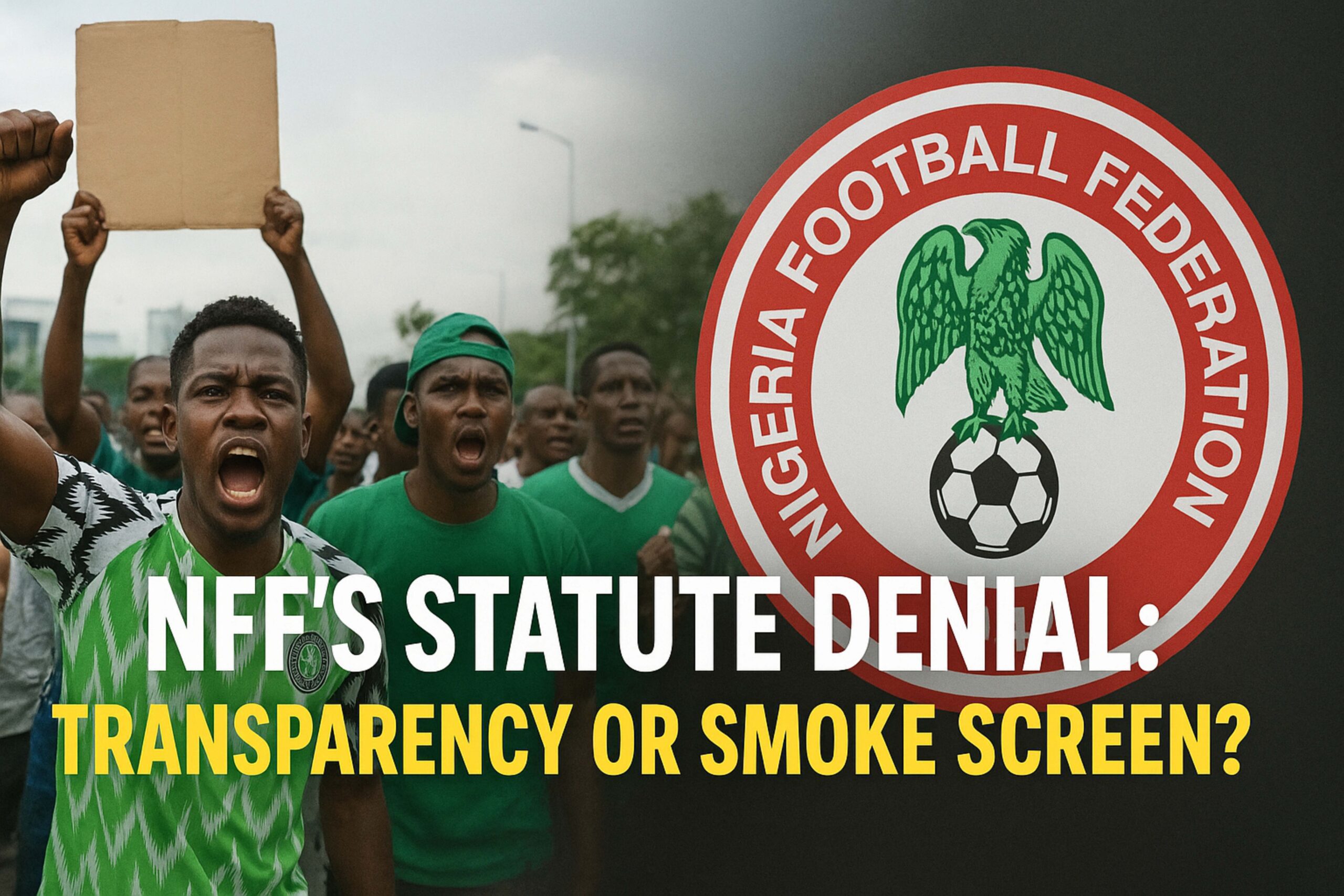
Nigerian football has once again found itself in the spotlight, not for the dazzling skills on the pitch but for controversies off it. The Nigeria Football Federation (NFF) recently issued a denial concerning its statutes and governance structure—a move that has sparked heated debates across the country. While some see this as a genuine attempt to reassure fans and stakeholders, others view it as nothing more than a smoke screen, masking deeper issues that have plagued Nigerian football for decades.
This post examines the call for transparency, the claims of decline, and the changes fans and stakeholders are demanding to restore trust and rebuild the nation’s footballing culture.
The Transparency Question
The NFF’s denial of issues within its statutes has raised eyebrows. Critics argue that the federation has often lacked clear governance processes, with decisions shrouded in secrecy. Fans, journalists, and even former players are asking tough questions:
-
Who really benefits from the current football system?
-
Why are financial reports and sponsorship deals rarely made public?
-
Why does Nigerian football consistently fall short of its potential despite its talent pool?
For many, transparency isn’t just about documents—it’s about accountability. Nigerians want to know how funds are being used, why grassroots football isn’t prioritized, and whether leadership appointments are merit-based.
Claims of Decline in Nigerian Football
The sense of decline in Nigerian football is not merely emotional—it’s supported by worrying trends:
-
Grassroots Neglect – Local academies and school programs that once produced stars have been abandoned, leaving raw talent untapped.
-
Domestic League Struggles – The Nigeria Professional Football League (NPFL) suffers from poor management, irregular fixtures, and little fan engagement.
-
International Failures – While the Super Eagles and Super Falcons occasionally shine, Nigeria is no longer the consistent African powerhouse it once was.
-
Administrative Bottlenecks – Elections, appointments, and policy decisions often seem political rather than strategic.
The denial of problems within the statutes feels disingenuous to many, especially when the cracks in the system are visible.
What Fans and Stakeholders Really Want
Amid the noise, one thing is clear: Nigerians love football and want it to thrive. But beyond the emotional attachment, stakeholders are calling for specific changes:
-
True Transparency in Finances: Annual financial audits and sponsorship details should be publicly accessible.
-
Grassroots Development: Investment in youth academies, school tournaments, and local scouting programs.
-
League Revamp: Improve the NPFL with proper broadcasting rights, better stadium facilities, and stricter regulations for clubs.
-
Merit-Based Appointments: Leadership roles within the NFF should prioritize competence, not political ties.
-
Engagement with Fans: Open forums, digital platforms, and community engagement to rebuild trust.
The Bigger Picture
The crisis facing Nigerian football is more than just statutes—it’s about trust and governance. Fans are no longer satisfied with mere denials; they want action. Whether the NFF’s denial is a smoke screen or a genuine move for transparency will depend on what comes next.
Will the federation open its books? Will it reform its structures to prioritize the game over politics? Or will it continue with business as usual until another crisis erupts?
Conclusion
Nigerian football is at a crossroads. The NFF’s statute denial may have triggered debate, but it has also reignited calls for real change. Fans, players, and stakeholders are watching closely. The future of Nigerian football depends on whether the leadership listens—or whether history repeats itself.
#NigerianFootball#NFF#SuperEagles#SuperFalcons#NPFL#FootballGovernance#NFFTransparency#NigeriaSports#FootballReform#NigerianFootballFans