




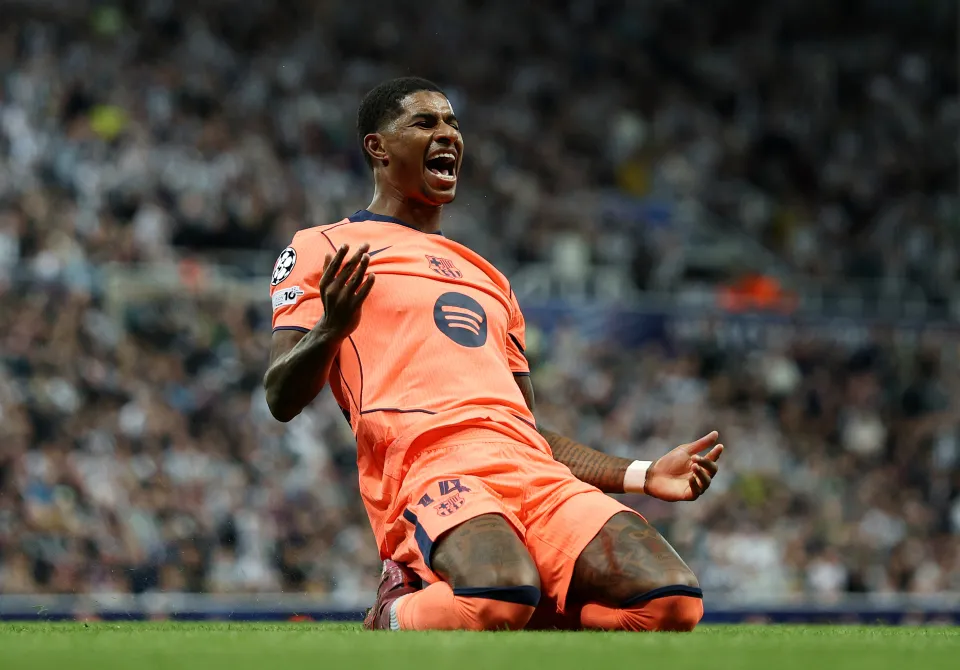
Marcus Rashford’s resurgence at FC Barcelona has become one of the most intriguing football stories of 2025. After a turbulent spell at Manchester United, where inconsistency and questions over his attitude overshadowed his talent, Rashford appears to have rediscovered his hunger in Spain.
But is this revival simply a product of a new environment — or does it expose something deeper about Manchester United’s culture and the players’ own mentality?
Let’s unpack the facts, the numbers, and the psychology behind Rashford’s revival at Barcelona.
⚽ 1. What Changed? The Facts
-
Rashford joined Barcelona on a season-long loan in July 2025.
-
Under Hansi Flick, he has already recorded more goal involvements than he managed during his final months at Old Trafford.
-
His early performances have reignited talk of a permanent deal, with Barça fans praising his directness, energy, and adaptability in wide positions.
This rapid turnaround is not luck — it’s a result of structure, fit, and motivation.
🔍 2. Tactical Fit — Why He’s Thriving Under Hansi Flick
At Manchester United, Rashford’s form dipped due to a lack of clarity in his tactical role. He was shuffled between left wing, right wing, and even false nine — often without defined responsibilities.
In Barcelona, things are different:
-
Defined role: Rashford operates primarily as an inside forward from the left, cutting inside with purpose while Pedri and Gündogan feed him vertical passes.
-
Quick transitions: Flick’s style values pace and direct runs in behind, perfectly matching Rashford’s natural strengths.
-
Consistency in minutes: With Raphinha and Ferran Torres rotating, Rashford enjoys steady starts, which sharpen his decision-making and confidence.
The results are visible — increased shots per game, better xG positioning, and more pressing actions than he displayed at United last season.
💪 3. Mentality: Comfort vs. Challenge
The biggest difference, however, may not be tactical — it’s psychological.
At Manchester United, Rashford appeared comfortable. A homegrown hero, adored by fans, with a massive contract and brand presence — but perhaps lacking that inner edge.
In Barcelona, he’s challenged. Every position is competitive, every performance scrutinized. That pressure has brought back the Rashford of old — hungry, focused, and willing to run the hard yards.
“Sometimes, when you’re in a stable spot for too long, you lose that spark,” one former United player told ESPN. “At Barça, he has something to prove again.”
This speaks to a broader truth: elite athletes thrive under challenge, not comfort.
🏟️ 4. The Manchester United Culture Question
Many critics believe Rashford’s stagnation reflects a deeper cultural problem at Old Trafford. Over the years, several top players — from Pogba to Sancho — have suffered similar dips in form amid managerial turnover and internal chaos.
United’s constant tactical shifts, uncertain leadership, and inconsistent expectations have eroded player motivation. When the environment lacks clarity, even the most talented players can lose direction.
Rashford’s revival abroad exposes this reality: it’s not just about the player, but the system around him.
🔥 5. Attitude and Accountability
Let’s be honest — Rashford’s body language at times frustrated fans. Walking instead of pressing, appearing disinterested after substitutions, or lacking aggression in 1v1s. Those moments invited criticism and questions about professionalism.
But here’s the nuance: when players lose faith in a system, motivation drops. In Barcelona, the system demands effort. The expectations are clear. And Rashford has responded — sprinting, tracking back, and playing with visible intensity.
It’s not that Rashford lacked ability or desire; he lacked structure, belief, and accountability.
🚀 6. What It Means for Rashford’s Future
If his trajectory continues, Rashford could force a permanent move to Barcelona — or at the very least, return to United as a rejuvenated, mentally tougher player.
But there’s a warning here for Manchester United:
“When players thrive elsewhere but stagnate at home, the problem is internal.”
United must rediscover a culture of hunger, competition, and tactical identity — or risk losing more of their best talents to clubs that demand more.
🧩 7. Key Takeaways
-
Rashford’s Barcelona form is no fluke — it’s the result of role clarity, tactical fit, and motivation.
-
Manchester United’s unstable culture and lack of accountability hinder player growth.
-
Comfort can kill hunger — and Rashford’s rebirth shows the power of stepping out of one’s comfort zone.
❓ 8. FAQs
Q: Has Marcus Rashford permanently left Manchester United?
A: No. He’s on a season-long loan at Barcelona with an option to buy.
Q: Why is Rashford playing better at Barcelona?
A: Because he has a clearer tactical role, consistent minutes, and renewed motivation under Hansi Flick.
Q: Is Rashford to blame for Manchester United’s problems?
A: No single player is to blame. United’s instability and poor culture have affected multiple players.
🏁 Final Thought
Marcus Rashford’s story is more than a footballing subplot — it’s a case study in comfort, culture, and challenge. His revival in Spain reminds us that success in elite sport depends not just on talent, but on the right environment to demand the best from it.
If Barcelona has reignited its fire, perhaps Manchester United needs to ask: why did it ever go out in the first place?
#MarcusRashford #Barca #ManUnited #FootballAnalysis #LaLiga #TacticalBreakdown #RashfordRevival #SportsCulture #SoccerInsights #ChariotGlobal