


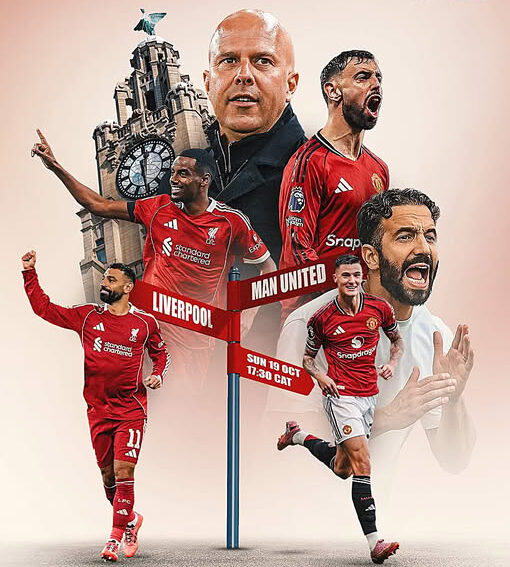
Sunday’s Premier League fixture between Manchester United and Liverpool marks a milestone in this storied rivalry: it will be the 100th competitive meeting at Liverpool’s home stadium, Anfield. Both clubs have dominated English football for generations, together claiming 40 top-flight titles (Liverpool 20, United 20) and an astonishing combined 137 major trophies. Because these are England’s two most decorated clubs, each derby draws global attention. Fans regard this clash as the must-win game of the season – media outlets call it “England’s rivalry in a historic sense” – so current form often pales in comparison to pride and bragging rights.
First Encounters and Early History
The first meeting took place in the 19th century. On April 28, 1894, Liverpool (then a Second Division side) beat Newton Heath (Manchester United’s precursor) 2–0 in a post-season test match. That result earned Liverpool promotion and sent Newton Heath down, setting the stage for decades of competition. In the following decades, both clubs found success and grew into giants of the game. By the mid-20th century, Liverpool had become a top-flight force, and United rebounded under Sir Matt Busby to dominate later on. These early chapters cemented a rivalry that would only deepen as both clubs collected trophies.
Head-to-Head Record & Trophies
To date, the teams have met well over 200 times. In all competitions, they have clashed 218 times, with Manchester United winning 83 games and Liverpool 72, and the rest were draws. United holds a slight edge in the head-to-head record, but the margin is narrow. The clubs’ trophy cabinets are likewise neck-and-neck: Liverpool has won 69 major trophies versus United’s 68. In domestic honors, this works out to 40 league titles (Liverpool 20, United 20), 20 FA Cups (8–12), and 13 League Cups (4–9) between them. In short, almost every domestic title has been shared between them – underlining why each meeting is effectively a battle for bragging rights in the record books.
Fan Rivalry and Atmosphere
The intensity off the pitch is legendary. The rivalry has roots in history – for example, fans point to the 19th-century Manchester Ship Canal project as where the city feud began. In modern times, tensions sometimes flare. Liverpool supporters have flown highly offensive banners aimed at United (for instance, “Manc Bastards” along the M62) and even a provocative “Hillsborough murderers” banner at Old Trafford. Manchester United fans have at times returned fire with their own chants and banners (even referencing Hillsborough). Matches have seen heated chants and occasional clashes. (Football authorities have often fined both clubs for illicit chants in recent derbies.) Fortunately, modern policing and security mean that physical violence and hooliganism are far less common than in past decades. Still, the rivalry’s passion is palpable: both sets of supporters arrive ready to taunt and jeer the other side, making the derby atmosphere electric and sometimes edgy.
Upsets and “Form Goes Out the Window”
It is often said that league form doesn’t matter on derby day – anything can happen. Recent history backs that up. For example, in March 2023 Liverpool battered United 7–0 at Anfield, a result that was described as “impossible” and “the stuff of nightmares” for Unitedsi.com. (That result came even as both teams had ups and downs – illustrating that derby games are prone to shocks.) Likewise, surprise results have happened the other way around: struggling Liverpool once found a way to beat a United side fighting for a title. In general, both teams and managers talk about how these fixtures are different – concentration, pride, and intensity can override normal season narratives.
Key Players and Top Scorers in the Derbies
Over the years, certain players have repeatedly starred in this fixture. On Manchester United’s side, Ryan Giggs made more derby appearances than anyone (48 games), often key with his dribbling and goals. Steven Gerrard holds the appearance mark for Liverpool (35 games. As for goals, Mohamed Salah is the all-time top scorer in this fixture with 16 goals (Liverpool). Liverpool legend Steven Gerrard scored 9 goals here. For Manchester United, George Wall (9 goals) and Sandy Turnbull (9) are their joint top derby scorers. (Others like Stan Pearson, George Best, and more recently Marcus Rashford have also hit 7–8 goals in the fixture.) In short, every era has its heroes – from United’s early stalwarts to modern stars like Salah – who have “shown brightest” in derby history. The table below summarizes some of the leaders:
-
Manchester United: Most appearances – Ryan Giggs (48). Top scorers – George Wall (9 goals), Sandy Turnbull (9 goals), followed by Stan Pearson (8).
-
Liverpool: Most appearances – Steven Gerrard (35). Top scorers – Mohamed Salah (16 goals), Steven Gerrard (9 goals), Dick Forshaw (8 goals).
Why This Game Matters
Beyond points, each Manchester United–Liverpool match has huge symbolic importance. Fans of both sides see these games as “must-win” events. A victory is a source of pride that can buoy a team (and equally deflate the rival). The sheer number of trophies at stake – and the history behind them – amplifies every result. Media worldwide treat this as a marquee fixture. Even if neither team is challenging for the title, beating this rival can salvage a season or define a manager’s legacy. Given their combined trophy count and fanbases, these derbies are not just three points – they’re contests for bragging rights between England’s footballing giants.
#ManchesterUnited #LiverpoolFC #ManUtd #LFC #PremierLeague #FootballRivalry #DerbyDay #RedDevils #TheReds #Soccer #SportsHistory