

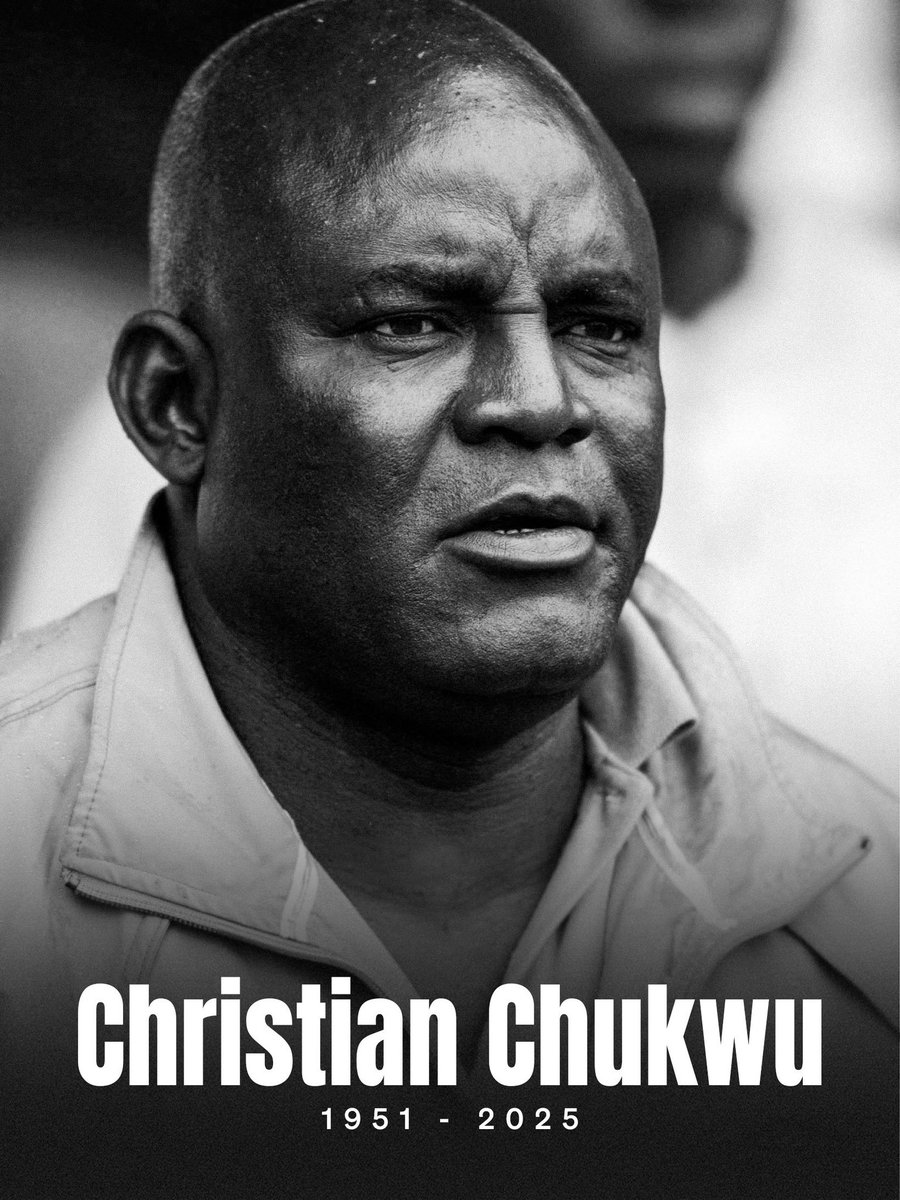
In the annals of Nigerian football, few names command as much respect as Christian Chukwu—fondly called “Chairman” for his resolute leadership, calm demeanour, and unshakeable character. Born 4 January 1951, Chukwu’s journey from a young defender in Enugu to captain of the national side, and later coach and administrator, epitomises professionalism, discipline, and unity.
This tribute is a comprehensive celebration of his glorious career and enduring legacy: his role as stalwart defender for Enugu Rangers International F.C., his captaincy of the then Green Eagles (now Super Eagles) to their first continental triumph, his years as coach (including a stint in Kenya), and above all his character and leadership — traits this article aims to highlight in detail, and which deserve to be remembered, studied and emulated.
Early Club Career & Enugu Rangers’ Dominance
Christian Chukwu spent his entire playing career with Enugu Rangers (then often called Rangers International) — a rarity in modern football.
– He joined his school team (National Grammar School, Nike, in Enugu) into the Rangers set-up, having impressed in the academicals under East Central State.
– Under his leadership as a player (he became captain fairly early), Rangers achieved domestic dominance: league titles, cup doubles, and even continental success.
– A pivotal moment: Rangers won the African Cup Winners’ Cup in 1977, marking major continental glory for the club from the East.
His presence in defence brought calmness, solidity, and assurance. It was said that when “Chairman” marshalled the back-line, the rest of the side could play with freedom. That kind of leadership proved instrumental in Rangers asserting themselves on the Nigerian scene. The synergy between him and his teammates built a culture of unity, of collective purpose, of “we fight together, we win together”.
In summary: For Rangers, Christian Chukwu was not just a player — he was a leader, a symbol, almost an institution. His influence helped shape a club that dominated Nigerian football in the 1970s and early 1980s.
Captain of the National Team & The 1980 AFCON Triumph
On the national stage, Christian Chukwu’s legacy is anchored by one unforgettable achievement: captaining the Green Eagles (now Super Eagles) to their first-ever continental crown at the 1980 Africa Cup of Nations (AFCON).
– He was already part of the team that had secured bronze medals in 1976 and 1978.
– In 1980, on home soil, the Green Eagles defeated Algeria 3-0 in the final, and Chukwu, as captain, lifted the Unity Cup.
– He was named Player of the Tournament, underscoring his commanding defensive display and leadership.
His style in defence — composed, authoritative, never panicked — allowed the team to focus on attacking ambition. His teammates often looked to him for calm when the heat of big matches set in. The unity he fostered in the squad is spoken of in football circles as one of the key reasons Nigeria broke through for that 1980 win.
Beyond the pitch, his lifting of the trophy remains an iconic image in Nigerian football history. It signified not just a sporting victory, but a moment of national pride, identity, and emergence.
Coach, Mento, R, and Continental Reach
After retiring as a player, Christian Chukwu transitioned into coaching and mentoring — continuing his legacy in new forms.
Within Niger, He returned to Enugu Rangers as a coach and later in administrative roles. His knowledge of the club, its culture, and the Nigerian game made him a natural fit.
Internationally — Kenya: In October 1998, he was appointed coach of the Harambee Stars of Kenya, stretching his influence across East Africa.
Super Eagles head coach: He became head coach of the Super Eagles between 2002 and 2005, leading the team to a third-place finish at the 2004 AFCON in Tunisia.
Also, though less documented in the sources I located, his role as an assistant in youth national sides helped develop the early global success U-17 teams. [Note: I’d encourage further primary sourcing for this point.]
Discipline, Character & The 2004 Nations Cup Drama
One of the hallmarks of Christian Chukwu’s legacy is his uncompromising stand on discipline, his insistence on unity and proper conduct — especially when he was in charge of the Super Eagles.
During the 2004 AFCON, reports emerged that some players broke camp rules, brought in ladies into their hotel rooms, and went clubbing while on national duty. In the face of such shenanigans, Chukwu stood his ground: he sanctioned the offending players, made it clear that national duty meant national responsibility, that being part of the Super Eagles carried duties beyond playing.
This episode speaks volumes: it shows a man unwilling to cause the team’s culture and unity to be compromised. When many might have looked the other way, he enforced discipline. That trait — character, principle, leadership — is central to why he remains “Chairman” in the collective memory of Nigerian football.
In an era when indiscipline can erode team spirit, his example still resonates: defence-first, discipline‐always, unity before individualism. For the younger generation of footballers, coaches, and administrators, Chukwu’s path remains instructive.
Why He Remains a Football Icon for Nigeria
-
Leadership by example: As captain and defender, Christian Chukwu brought calm, solidity, and authority.
-
Loyalty and club legacy: His entire playing career at Enugu Rangers, his contributions there, helped build a dominant period — a benchmark for club football in Nigeria.
-
National breakthrough: He led Nigeria to its first AFCON title — a seismic national achievement.
-
Character & discipline: Through coaching and administration, he insisted on unity, standards, and moral integrity — qualities often undervalued in sport.
-
Mentorship & influence: He helped define generations of players, coaches, and the culture of Nigerian football.
-
Symbolic status: He is more than a sportsman — he is a national symbol of what disciplined, united football can achieve for Nigeria.
Tribute & Call to Remember
This article is a tribute to Christian Chukwu — his qualities of leadership, unity, discipline, calm in chaos, loyalty to club and country. As we reflect, let us not just remember the trophies and the iconic image of him lifting the Unity Cup in 1980, but the values he embodied. Let us celebrate him not only as a great defender or coach, but as a man of character whose story continues to inspire.
For younger Nigerian footballers and fans: let his journey remind you that talent alone isn’t enough; discipline, unity, leadership, and loyalty matter. For coaches and administrators: his example shows that enforcing standards, preserving team culture, and honouring history pay dividends.
As Nigeria continues to evolve in football, Christian Chukwu’s legacy remains a guiding light — the “pillar” of that 1980 Green Eagles team, the “Chairman” of Enugu Rangers’ dominance, the coach who never lost sight of team first, nation.
Conclusion
In the final reckoning, Christian Chukwu is a towering figure in Nigerian football history — a legend for the club loyalist, the national servant, the disciplined leader, the unifier. His story deserves to be told, retold, studied, and honoured. This tribute is offered in that spirit.
#ChristianChukwu #ChairmanChukwu #EnuguRangers #NigeriaFootball #SuperEagles #1980AFCON #FootballLeadership #DisciplineInSport #AfricanFootballLegend #NigerianLegends#ChariotGlobal