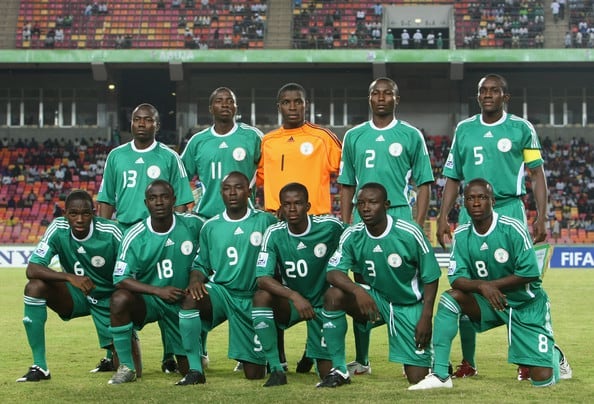





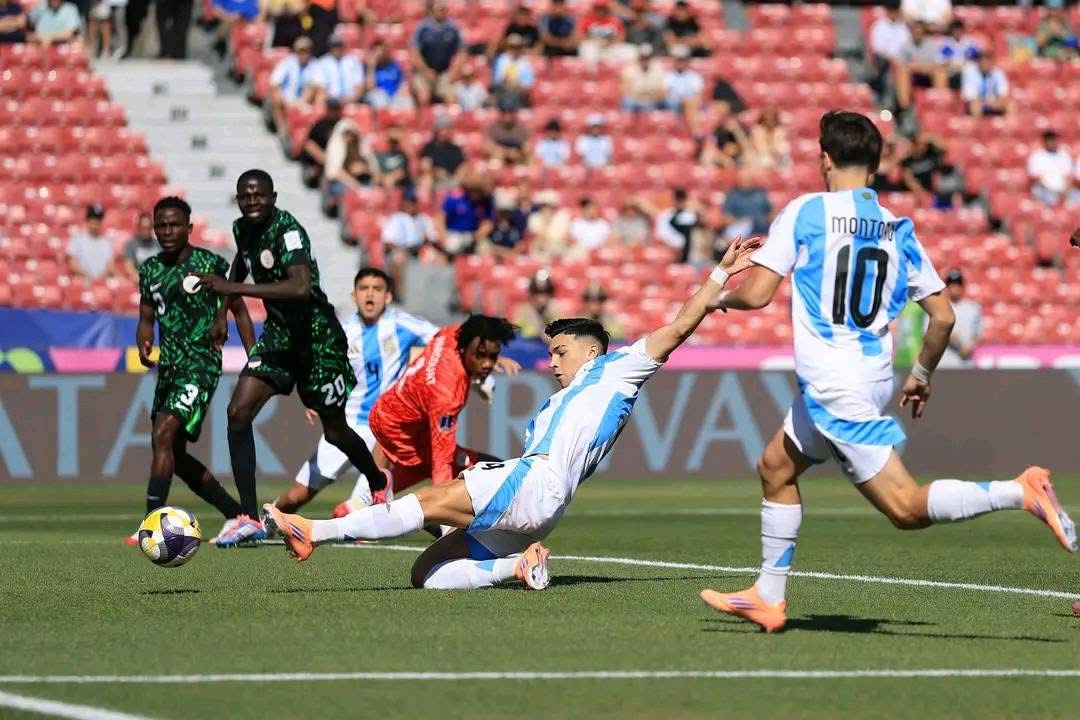
The Flying Eagles of Nigeria have once again crashed out of the FIFA U-20 World Cup, this time in brutal fashion — a 4–0 humiliation at the hands of Argentina in the Round of 16. For a nation with Nigeria’s football pedigree and youth football history, this is more than just a loss; it’s a wake-up call wrapped in embarrassment.
The result didn’t just expose the players — it laid bare the chronic decay, poor planning, and lack of tactical identity that have plagued Nigeria’s youth teams for years.
⚽ A Team Without Identity
Let’s be brutally honest: the Flying Eagles looked lost from the first whistle. There was no clear pattern of play, no attacking rhythm, no midfield control, and absolutely no tactical cohesion.
It’s as though the players were strangers who met in the tunnel before kickoff. The midfield was non-existent, constantly overrun by Argentina’s high press. The defense was shaky and indecisive, while the attack offered little to no creativity.
You cannot win at this level by hoping for luck or relying on raw talent — you need structure, vision, and discipline, all of which were glaringly absent.
🧠 Coaching and Tactical Disaster
The coaching setup must take full responsibility. The Flying Eagles’ tactical setup was outdated, static, and uninspired.
The team played with a deep defensive line, inviting relentless pressure from Argentina, yet lacked the transition speed to counterattack effectively. The wing play was predictable, the central play lacked imagination, and substitutions made little impact.
At this stage of football development, every coach should understand the modern game — pressing structures, build-up play, and tactical fluidity. Nigeria’s approach was stuck in the past, exposing a lack of preparation and tactical education at the coaching level.
🔍 Are the Players Good Enough?
The truth hurts, but it must be said: many of these players looked technically and mentally unready for top-level football. The basics — passing accuracy, off-the-ball movement, and positional awareness — were poor.
Nigeria used to produce technically gifted youth talents — think of Mikel Obi, Kelechi Iheanacho, Taiwo Awoniyi, and Samuel Chukwueze. Today’s crop looks far behind in technical development. That’s not just the players’ fault — it’s a reflection of the broken youth system that no longer prioritizes football intelligence and proper training.
⚠️ The NFF and the Rot in Youth Development
Beyond the pitch, the Nigeria Football Federation (NFF) bears a heavy share of the blame. Youth football in Nigeria has been reduced to short-term tournaments and hurried scouting.
Where are the developmental academies? Where is the long-term plan to groom U-15 and U-17 players into a cohesive system that feeds into the U-20s and eventually the Super Eagles?
We keep recycling the same mistakes — late camping, poor facilities, inadequate scouting, and political interference in player selection. Until these fundamental issues are fixed, Nigeria will continue to suffer embarrassing exits on the world stage.
💭 No Excuses Left
Nigeria can no longer hide behind excuses of luck or refereeing decisions. The Flying Eagles were simply not good enough — tactically, mentally, and technically. The gulf between Nigeria and the top football nations has widened alarmingly.
It’s time for a total overhaul — from coaching education to talent development, from scouting systems to tactical awareness. Nigerian football needs brains as much as it needs passion.
🗣️ Final Verdict
The Flying Eagles’ U-20 World Cup exit was not a surprise — it was a predictable disaster born out of years of neglect. Until Nigeria takes youth football seriously again, we’ll keep producing disappointment instead of champions.
The question now is not just what went wrong, but whether anyone at the top is willing to fix it.
#FlyingEagles #NigeriaFootball #FIFAU20WorldCup #NigerianSports #FootballAnalysis #NaijaSports #YouthDevelopment #NFF #FootballTactics #NigeriaU20 #FIFAU20 #NigerianFootballNews #FlyingEaglesExit #NigerianCoaches #SoccerAnalysis