




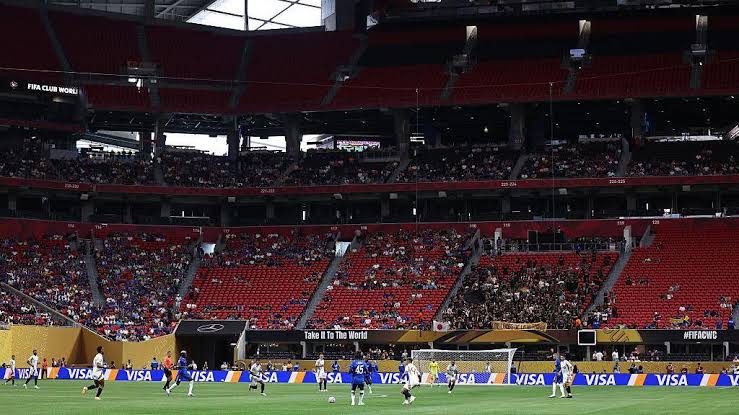
As the expanded 32-team Club World Cup unfolds across U.S. venues, striking rows of empty seats have overshadowed marquee matchups. Despite an aggregate attendance of 556,369 over the first 16 games, stadiums are only 56.8 percent full, leaving 423,004 seats unoccupied—and fueling doubts about the tournament’s appeal. Here’s why fans aren’t turning up… and how FIFA can fix it.
The Scale of the Problem
- Group-stage matches have tallied over 1 million vacant seats across 48 games, averaging just 56.7 percent occupancy.
- Even fixtures featuring global giants draw surprisingly thin crowds: Chelsea vs. LAFC in Atlanta saw only 22,137 fans in a 71,000-seat arena (32 percent full).
Key Causes
- Mismatched Venues
FIFA opted for gargantuan NFL stadiums—70,000+ capacity—making modest crowds look microscopic. Many matches struggled to hit even half capacity, creating uninspiring atmospheres. Smaller MLS or college venues would have filled out and amplified energy. - High Ticket Prices
Opening-round tickets started at $223 for “cheap” seats, pricing out core soccer supporters. Even after FIFA slashed rates, the damage was done: early sticker shock deterred fans permanently. - Awkward Scheduling
Weekday kickoffs at noon or 3 p.m. local time clashed with work and school, while late-night European TV windows alienated U.S. audiences. Simultaneous Concacaf Gold Cup matches further split soccer’s seasonal attention. - Lack of Tradition & Cachet
Unlike the quadrennial World Cup, this tournament has just 25 years of history and no generational yearning. Neutral fans haven’t built emotional ties to teams like Al Ain or Ulsan, so “appointment TV” status remains elusive. - Uneven Team Profiles
While Real Madrid vs. Al Hilal packed Miami’s Hard Rock Stadium (62,415 fans), low-profile clashes—Ulsan vs. Mamelodi Sundowns drew only 3,412—highlight the gulf in draw power. European heavyweights can’t carry every fixture single-handedly.
Probable Solutions
- Right-Size the Stadiums
Shift group-stage games to 20,000–30,000-seat soccer-specific venues. Packed stands will magnify atmosphere and avoid the “half-empty” optics that plague NFL arenas. - Dynamic, Fan-Friendly Pricing
Adopt tiered pricing—early-bird discounts, family packs, and local-resident rates—to lower entry barriers for genuine supporters and fill seats quickly. - Smart Scheduling
Cluster matches on weekends, coordinate kickoffs around local work patterns, and avoid Gold Cup clashes. Peak-time windows for both U.S. and European audiences will maximize in-stadium and broadcast viewership. - Narrative-Driven Marketing
Build storylines around underdog clubs, highlight player journeys, and engage diasporas via targeted community outreach. Emphasize regional rivalries and personal fan experiences to spark emotional investment. - Enhanced On-Site Fan Engagement
Create fan zones with live music, local food vendors, youth clinics, and interactive sponsor activations. Turn matchday into a festival—fans will come for the full experience, not just 90 minutes of football. - Guaranteed Star Appearances
Incentivize clubs to field key players (or host meet-and-greets) to ensure marquee attractions. Fans pay for star power; rotating benches for non-competitive fixtures risks disenchantment.
By tailoring venues, pricing, marketing and scheduling to fan needs—not FIFA’s grand vision—the Club World Cup can transform empty seats into electric atmospheres. With the right fixes, next summer’s “dry run” for the 2026 World Cup could yet deliver the packed stands and passionate crowds the beautiful game deserves.